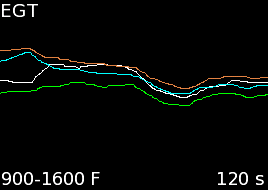
Our EGT Time History graph makes it easy to distinguish between engine problems affecting one cylinder, or the entire engine. This distinction could be essential when making decisions in response to engine problems.


Latest News
- New Mini EFIS on Display at SUN ‘n FUN!
A prototype of the new version of our Mini EFIS is currently on display in our booth at SUN ‘n FUN, with units going into production soon!
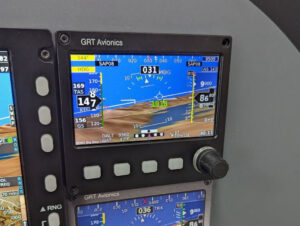

- Re-designed Mini EFIS Expected to Become Available Spring 2024Although the Mini-X and Mini-AP were highly popular, there were a few feature requests that we kept hearing over and over again. “Please make it so that it mounts in a standard 3-1/8″ hole” and “more serial ports please” to name a couple. In response to customer request, we have been in the process of re-designing the Mini to incorporate these changes as well as a few other refinements:
- Mounts in a 3-1/8″ hole
- 6 serial ports
- 2 diode isolated power inputs
- Internal backup battery option which much greater capacity and estimated lifespan
- 25 pin d-sub connector. Pinout is mostly the same as our other EFIS displays.
- USB Type A connector for updates/saving flight data
While the new Mini EFIS will mount in a 3-1/8″ hole, the bezel and screen size will remain unchanged. An thin adapter plate will be used so that installation may be completed without drilling or cutting the panel. The price is yet to be determined, but like all of our products, the new Mini will be a great value for the price. The new Mini is expected to become available Spring of 2024. - GRT Avionics in 2022 Lindy Award Winner
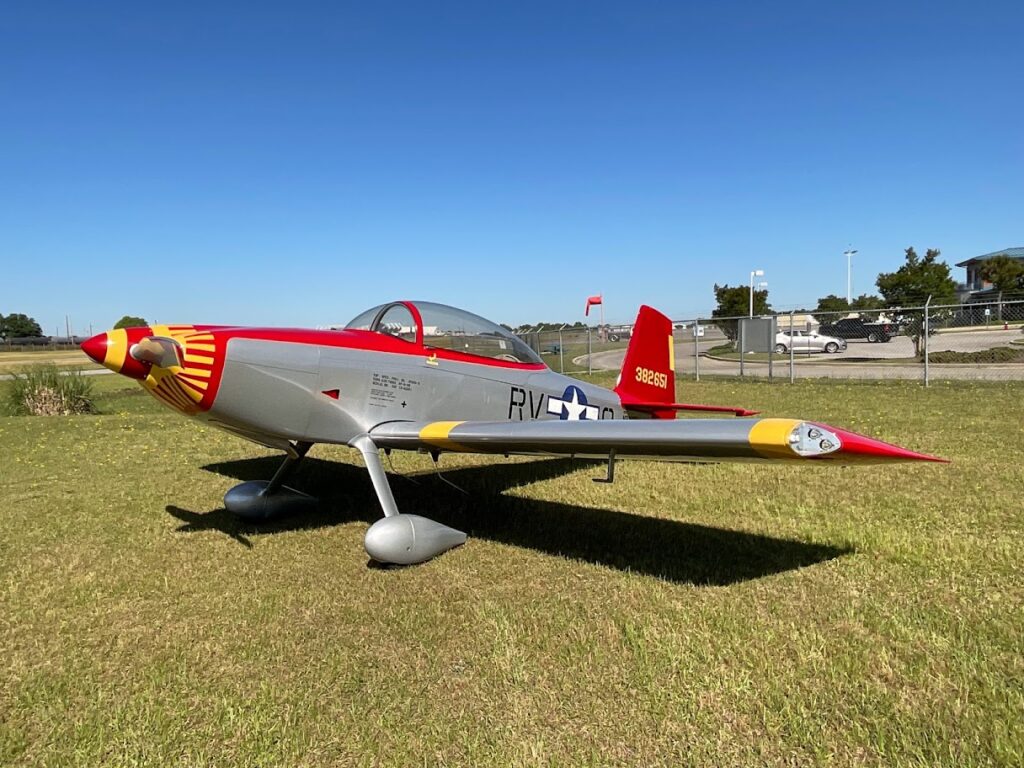
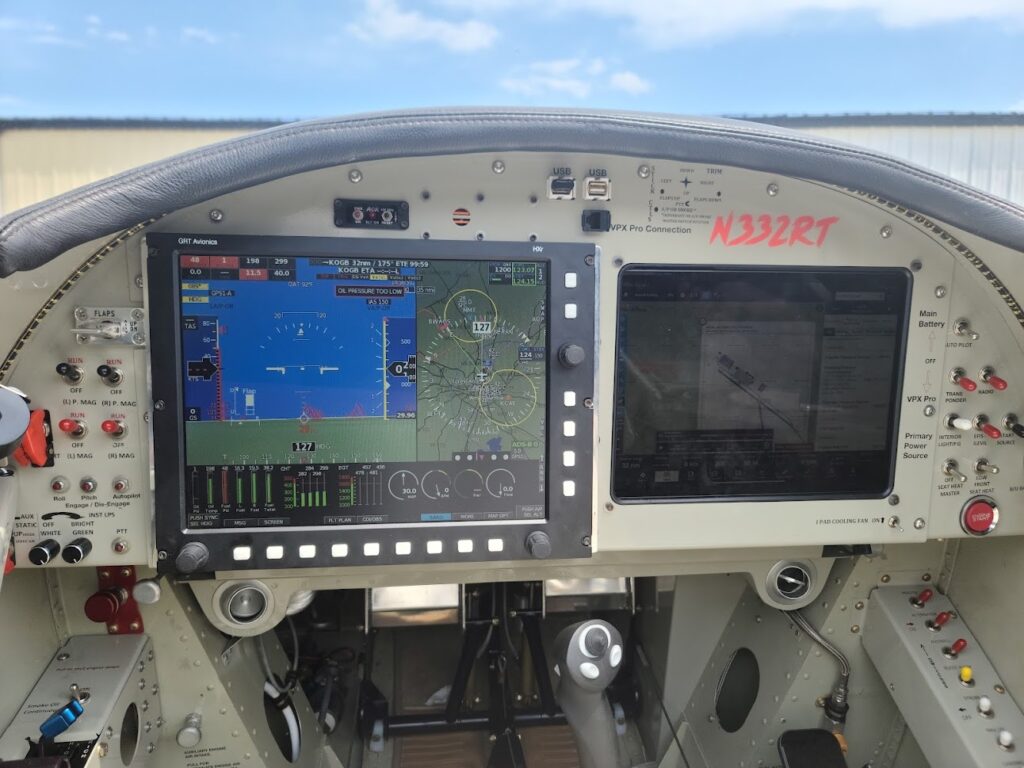
Congratulations to Scott McElroy for winning a 2022 Lindy Award plaque for Outstanding Workmanship on his beautiful Horizon HXr equipped RV-8, N332RT. It’s N-number, red tail and overall paint scheme pay tribute to the 332nd Fighter Group, also known as the Tuskegee Airmen.